
The Perfect Acoustic: How Venue Design Enhances Musical Performance
There is a difference between hearing live music and experiencing it. A great performance begins with the artist, but what happens between the stage and the audience matters too. The size of the room, the distance between performer and listener, the way sound moves through the space, and even the atmosphere surrounding the performance can change how a song feels.
At Wayfarer Appalachia, we have learned that not every kind of music belongs in the same kind of room. That is part of why live music here happens across three distinct spaces: The Velvet Room, the Starlight Porch and the Crossroads Saloon. Each creates a different relationship between the musician, the music and the people listening.
The Room Becomes Part of the Instrument
Acoustics are often discussed as if they are simply a technical problem involving microphones, speakers and sound levels. Those things matter, but good acoustics begin much earlier.
The physical environment affects what reaches the listener. Hard surfaces can reflect sound. Softer materials and furnishings can help control it. The scale and shape of a room affect how sound develops, while the audience's position determines how directly they experience the performance.
Then there is something that cannot be measured quite as easily: proximity.
When an artist is only a few feet away, a quiet guitar passage remains quiet. A lyric does not have to compete with a cavernous room. You can hear the breath before a line, the touch of fingers against strings and sometimes even the natural sound of the instrument before amplification becomes part of the equation.
For the right performance, intimacy is not a limitation.
It is an advantage.
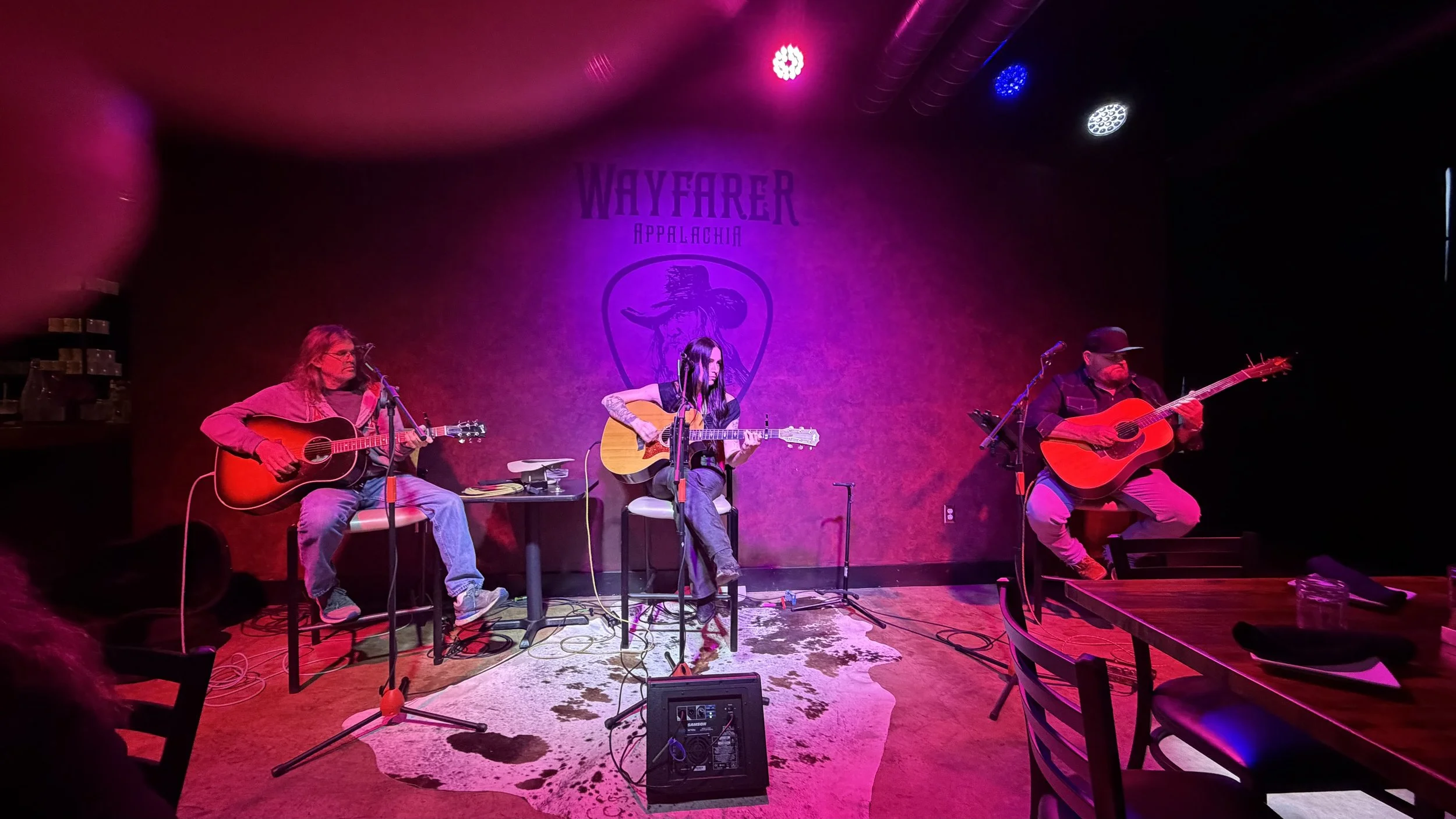
The Velvet Room: Built Around Listening
The Velvet Room is Wayfarer's premier listening room and the center of our songwriter experience. It was created for acoustic performances, songwriter rounds, touring artists, and musicians whose songs deserve something increasingly difficult to find: an audience that is actually listening.
That changes a performance.
In a traditional bar setting, music can become part of the background. In a listening room, the relationship is reversed. The artist and the song become the focus.
The intimacy of the Velvet Room allows performers to pull the audience into the details of their music. Stories behind songs become part of the evening. Subtle arrangements have room to breathe. Lyrics carry more weight because the listener is close enough to hear not just the words, but the intention behind them.
It is particularly suited to the songwriter tradition that runs so deeply through Appalachia and Nashville, where sometimes the story before the song is every bit as important as the chorus.
Why Intimate Rooms Matter to Songwriters
Some music was never meant to fight for attention.
A singer-songwriter with an acoustic guitar does not necessarily need a massive sound system or a giant stage. What that artist needs is clarity, connection, and a room that allows nuance to survive.
That is why great listening rooms have played such an important role in American music. They reduce the physical and psychological distance between performer and audience.
Suddenly, the person who wrote the song is not somebody on a screen or a distant figure beneath a spotlight. They are standing in the same room telling you why they wrote it.
That closeness can turn a concert into something more personal: a shared experience that only existed for those people, in that room, on that particular night.
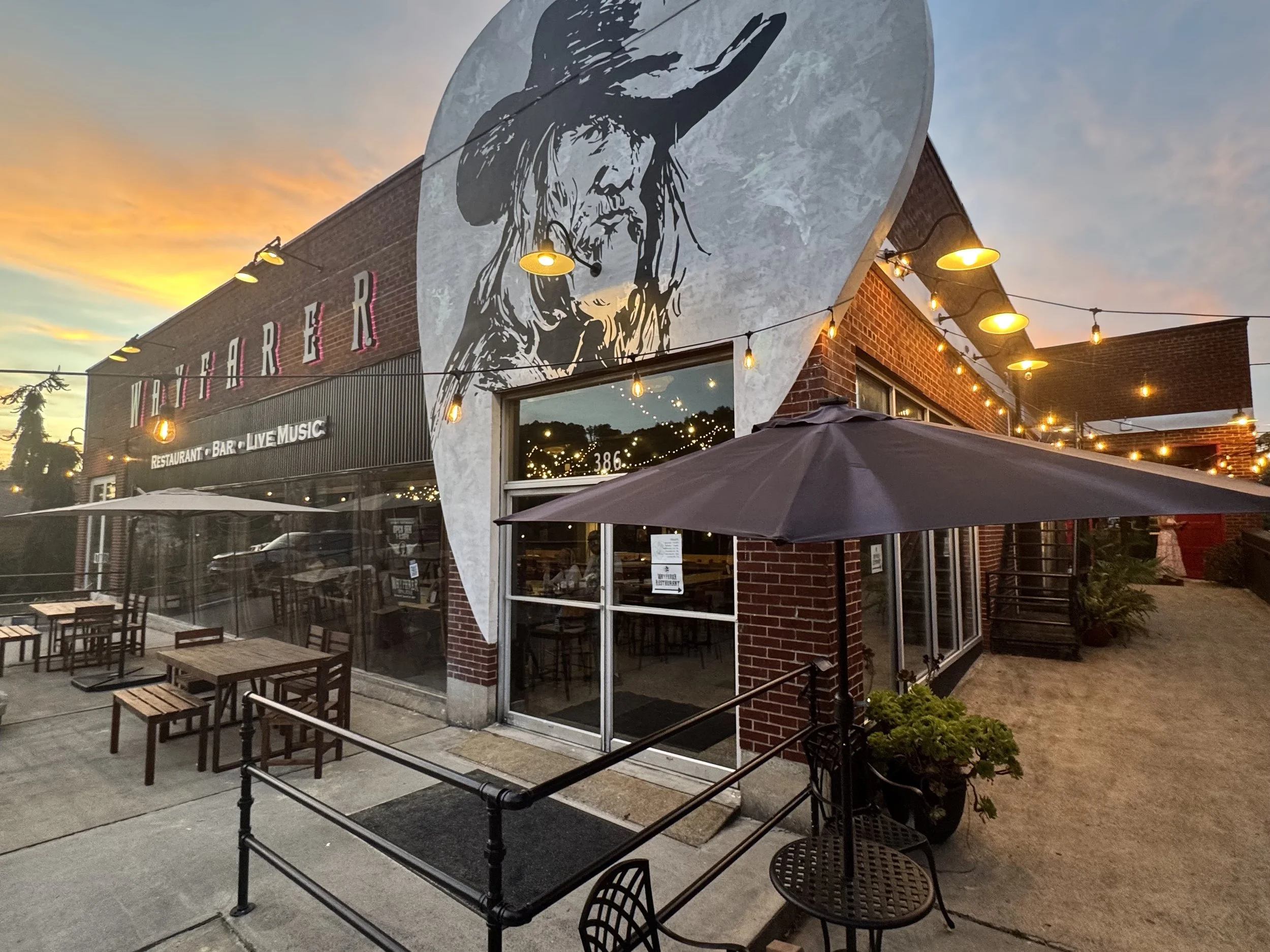
The Starlight Porch: Letting Music Breathe
Move outside, and the experience changes again. When weather permits, Wayfarer's Starlight Porch creates an outdoor setting for acoustic performers, singer-songwriters, duos, trios and smaller groups. Instead of containing the music within four walls, the Porch opens the performance to the mountain air and Historic Main Street.
Outdoor music has its own character. There is air around the sound. The environment becomes part of the evening. Summer temperatures, changing light, and the energy of people gathering outside all influence the memory of the performance.
It is less formal than a traditional concert room, but no less intentional.
Sometimes the perfect acoustic is not about controlling every sound.
Sometimes it is about giving the music room to breathe.
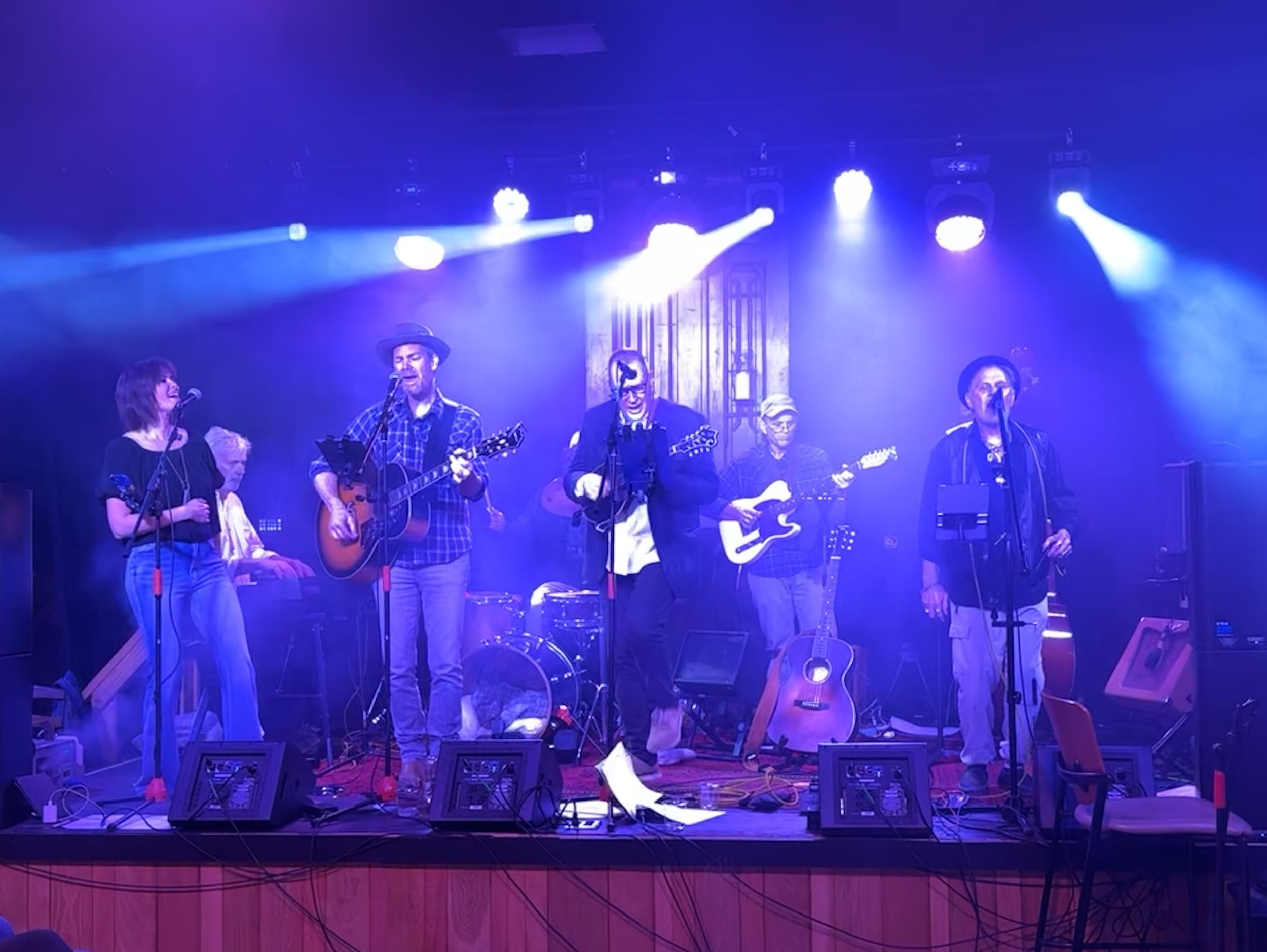
The Crossroads Saloon: When the Music Needs More Muscle
Of course, subtle is not always the assignment.
Some nights need drums.
The Crossroads Saloon gives Wayfarer a dedicated space for bands, touring acts, and performances that call for a larger, more energetic environment. With professional stage lighting and sound, it is designed to deliver the immersive atmosphere of a full-band performance while keeping the audience connected to the musicians onstage.
The principles are still the same, but the equation changes.
A full band requires room for multiple instruments to occupy their own sonic space. Vocals must remain clear. Rhythm needs impact without swallowing everything around it. Lighting, staging, and sound reinforcement work together to make the performance feel larger while preserving the individual musicianship behind it.
The Crossroads Saloon gives those performances somewhere to stretch their legs.
And yes, occasionally their amplifiers.
Three Stages, Three Different Experiences
Having three performance spaces is not simply about accommodating different crowd sizes. It allows Wayfarer to match the environment to the music.
A songwriter sharing an unfinished-feeling, deeply personal song belongs in a different atmosphere than a band driving through a Saturday-night set.
An acoustic duo beneath the evening sky creates something different again.
That variety is part of what makes Wayfarer unusual as a live music venue in Southwest Virginia. The objective is not simply to put musicians onstage as often as possible. It is to create the conditions where different kinds of musicians can perform at their best.
That distinction matters to audiences, but it matters to artists too.
When Artists Can Hear the Room
Musicians know very quickly when a room works.
They feel it in how much they have to push their voice, how clearly they can hear the other musicians, how naturally the audience responds, and whether the quiet moments are allowed to remain quiet.
A strong venue does not compete with the performer.
It supports them.
And when the relationship between artist, audience and space is right, something interesting happens: people stop thinking about the room altogether. They remember that the music sounded incredible and the night felt different.
That is probably the highest compliment venue design can receive.
Live Music in the Heart of Southwest Virginia
Wayfarer Appalachia sits on Historic Main Street in Tazewell, Virginia, bringing together live music, chef-crafted food, handcrafted cocktails, Appalachian culture and hospitality under one roof. The venue regularly welcomes songwriters, regional musicians and touring artists to Southwest Virginia.
But bringing remarkable artists to the mountains is only part of the equation.
We also want to give them a place worthy of the performance.
Whether it is the close connection of the Velvet Room, an evening beneath the sky on the Starlight Porch, or the energy of a full band inside the Crossroads Saloon, every stage offers a different way to experience music.
Perfect acoustic is not simply about how loud the music is.
It's about how closely you can feel it.
